For decades, the motocross world has largely been dominated by the familiar giants of Japan and Europe. Brands like Yamaha, Honda, KTM, and Kawasaki have long set the pace in the 450 class, where power, durability, and razor-sharp handling define championship-winning machines. Yet in recent years, another name has been steadily pushing its way into the conversation: Beta Motorcycles.
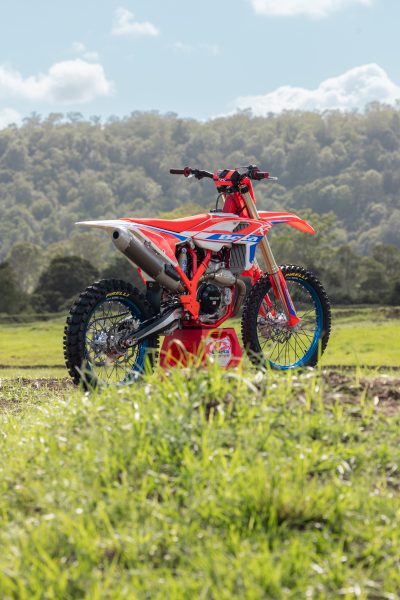
Known primarily for its success in off-road racing and enduro, the Italian manufacturer has been quietly building its motocross program with increasing determination. That effort is most visible in the RX lineup, Beta’s dedicated motocross range. For 2026, the flagship Beta RX 450 returns with meaningful refinements aimed squarely at improving performance, rideability, and the best part – more power!
On paper, the RX 450 already had the ingredients to compete with the best in the premier class. But the 2026 version focuses on polishing the details, more power, engine smoothness, chassis balance, and traction when pushing the limits.
BUILT FOR THE MODERN 450 CLASS
The 450 motocross category remains the ultimate proving ground for manufacturers. Bikes in this class are expected to deliver explosive horsepower while still offering predictable handling. Achieving that balance is no small task.
Beta’s approach with the RX 450 has always been slightly different from some competitors. Rather than chasing sheer peak horsepower numbers, the company prioritizes what it calls “rideability” which is a philosophy centered on usable power, manageable handling, and a bike that allows riders to maintain speed over long motos.
For 2026, Beta engineers doubled down on that concept. The RX 450’s design philosophy focuses on creating a motorcycle that is both aggressive and forgiving. It’s meant to give experienced racers the performance they demand while remaining approachable enough for ambitious amateurs moving into the 450 class. That balance is what defines the new model.
STRONGER, SMOOTHER POWER
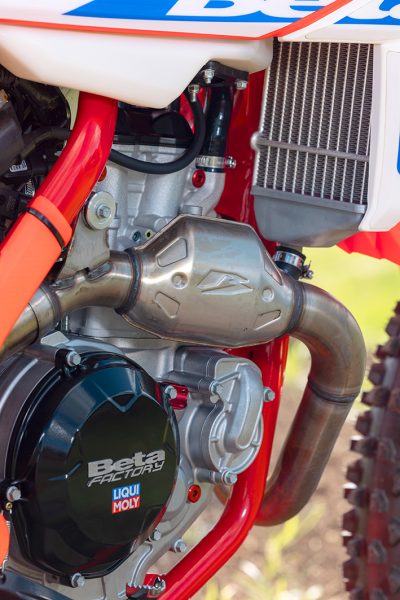
At the heart of the RX 450 sits a 449cc liquid-cooled single-cylinder four-stroke engine, a configuration that has become the standard for modern motocross machines. While the basic architecture remains familiar, Beta has made several key updates to improve performance and refinement.
The 2026 engine features an updated cylinder head and intake design aimed at improving airflow through the combustion chamber. By optimizing how air and fuel move through the engine, Beta has increased efficiency and sharpened throttle response. The result is an engine that feels more responsive off the bottom while still pulling hard through the mid-range.
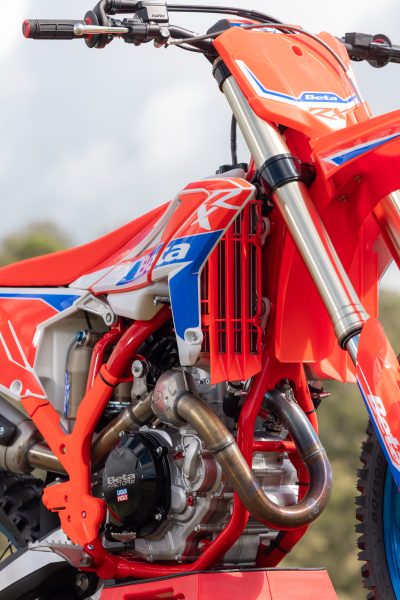
Perhaps the most noticeable improvement comes in the form of reduced vibration. Beta introduced a revised counter-balancer system designed to smooth out engine vibrations that can otherwise fatigue riders during long motos. The difference is subtle but meaningful. The bike feels calmer at high rpm and more comfortable when revved hard across rough terrain.
In a class where engines often feel brutally aggressive, the RX 450 stands out for its controllable power delivery. That doesn’t mean it lacks performance. Twist the throttle and the engine responds with a strong surge of torque that rockets the bike forward. The mid-range hit is particularly impressive, making it easy to clear jumps and accelerate out of tight corners. The powerband feels broad and predictable.
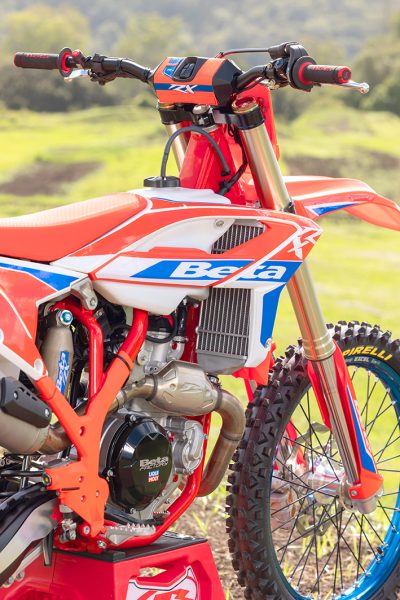
BREATHING IMPROVEMENTS
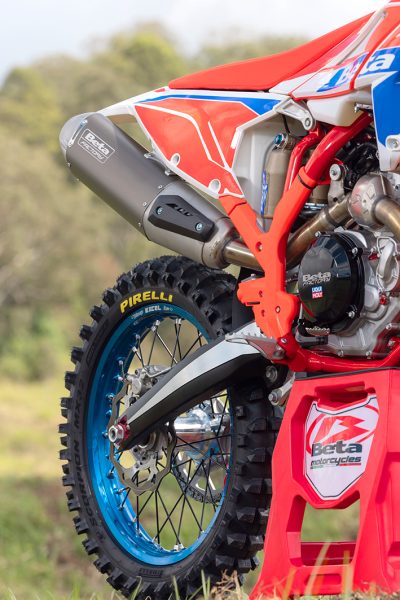
Complementing the engine updates is a redesigned exhaust system developed with race-focused performance in mind. The new system improves overall flow and contributes to stronger power across the rev range.
It also helps the bike meet modern sound regulations without sacrificing performance, an increasingly important factor for motocross tracks around the world. The result is a deeper, refined exhaust note that sounds way better than the old model while remaining compliant with competition standards.
STABle and agile
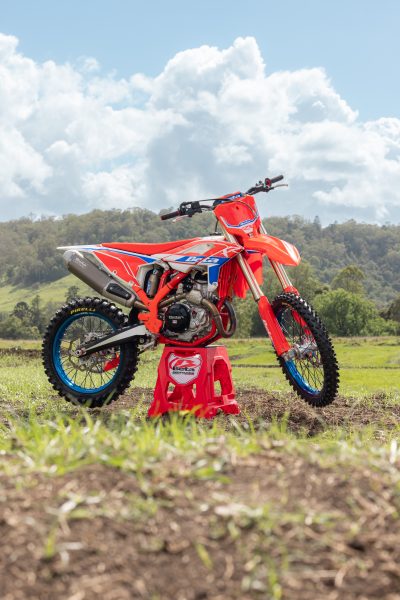
Power alone doesn’t win races. In motocross, the chassis is just as important as the engine, especially on tracks filled with ruts, braking bumps, and massive jumps. Beta has refined the RX 450’s frame for 2026 with a focus on improving front-end feel and overall stability.
The frame maintains its steel construction, a design choice that reflects Beta’s heritage and philosophy. While many competitors rely on aluminum frames, Beta continues to use steel for its ability to deliver a more progressive flex pattern.
For the 2026 model, engineers increased stiffness around the steering head area to enhance front-end precision. The change improves corner entry and gives riders better confidence when attacking rutted turns. The bike tracks straight at speed while still feeling nimble enough to change direction quickly, something the Beta has always been known for so it is good to see that trait has not been lost when making this model faster and more aggressive.
Top Gear
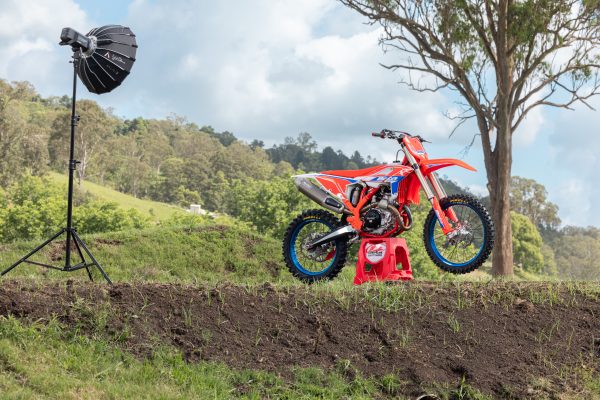
High-end suspension is essential in the 450 class, and Beta continues to rely on premium components to keep the RX 450 competitive. Up front, the bike features a set of fully adjustable KYB 48mm inverted forks. These forks have earned a strong reputation among racers for their consistency and tuning range.
At the rear, a KYB shock works with the bike’s linkage system. Both ends have been a little soft in previous versions but fresh settings have definitely made them firmer.
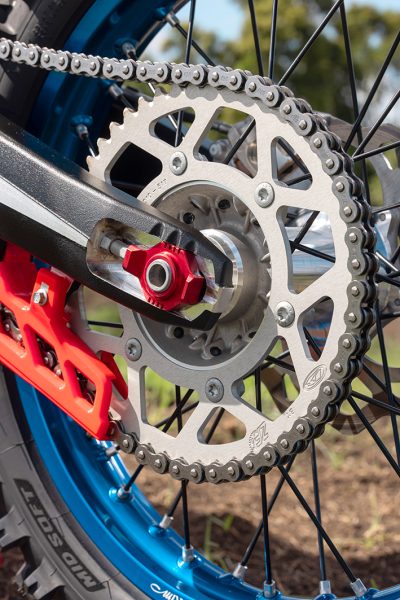
Stopping power is handled by Nissin brakes paired with Galfer discs. The front brake offers a firm but still progressive feel. The rear brake also felt quite progressive so if you accidentally jumped on it, you didn’t end up over the handlebar.
The only fault I can give the RX450 in the brake department is I personally would prefer a more modern feeling front brake master cylinder and lever.
A long way
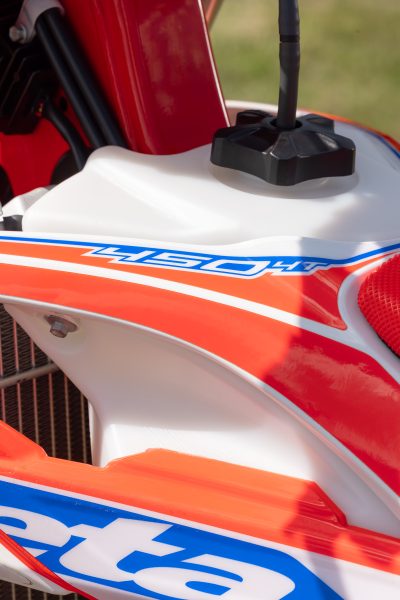
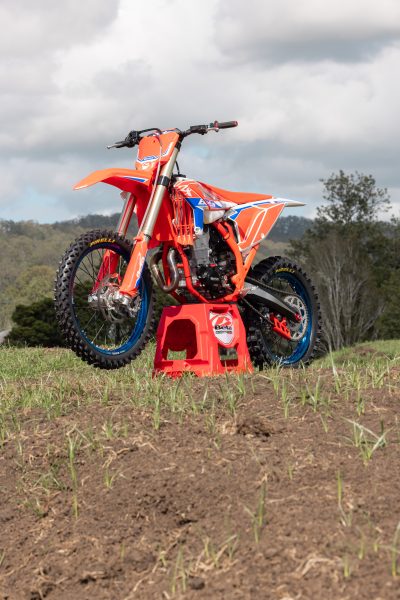
When Beta first introduced the RX450 it would have been the first Italian bike many motocross riders would have jumped on and as a result it might have felt a little foreign or weird. With this 2026 model, the bike’s layout feels natural from the moment you climb aboard. The seat, tank, and side panels feel more familiar, like the other bikes you’ve probably ridden before.
The slim midsection is particularly noticeable, because it helped me grip the bike with my knees. At around 104 kilograms dry, the RX 450 remains competitive in terms of weight.
What did I miss?
Ultimately, a motocross bike must prove itself where it matters most: against the stopwatch. Out in real riding conditions, the RX 450 impresses with its balanced personality. The engine delivers stronger acceleration but remains manageable, so you’re not tired from simply holding on. It isn’t the strongest in the class, still around mid-pack but it has more punch and it is definitely stronger than previous years
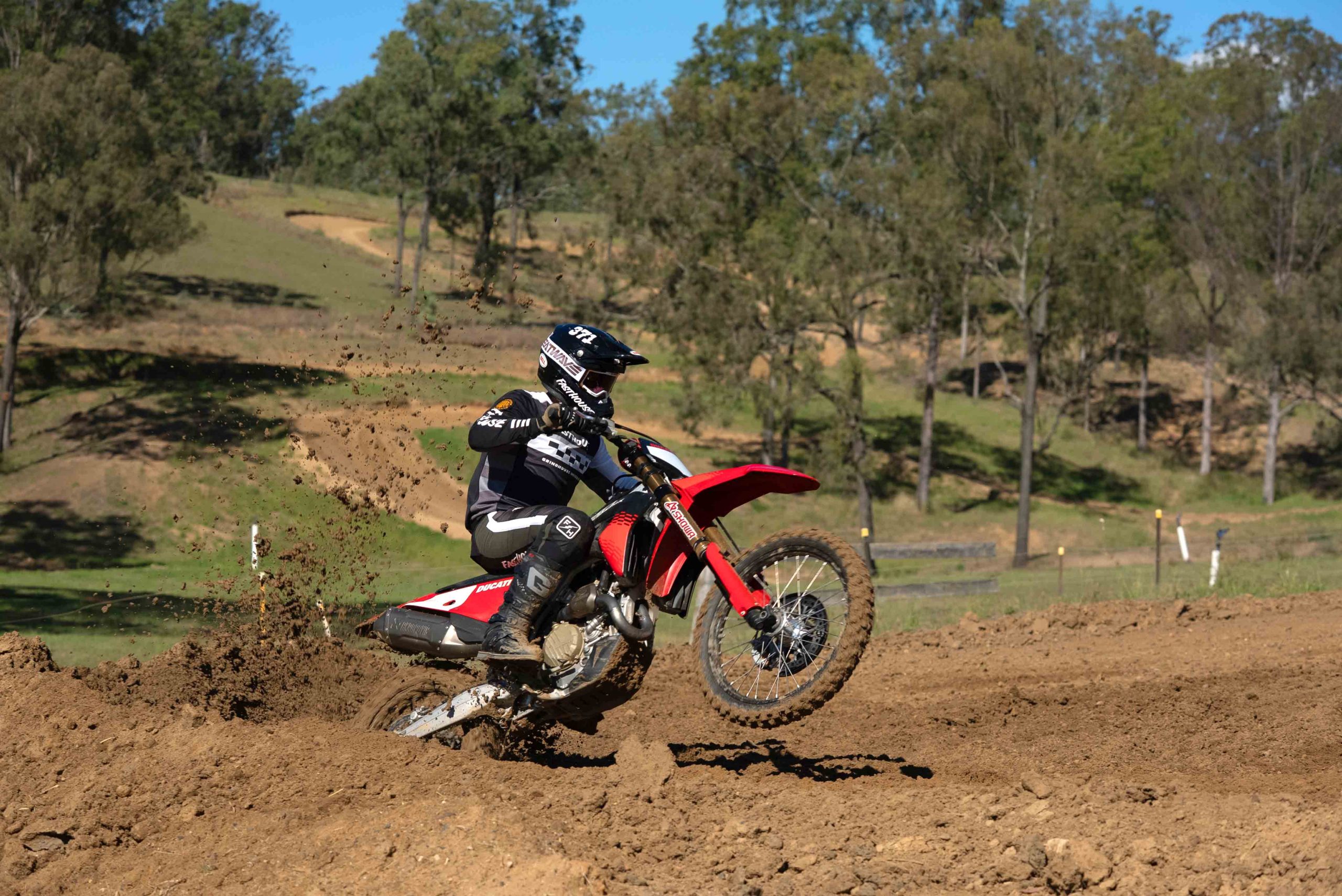
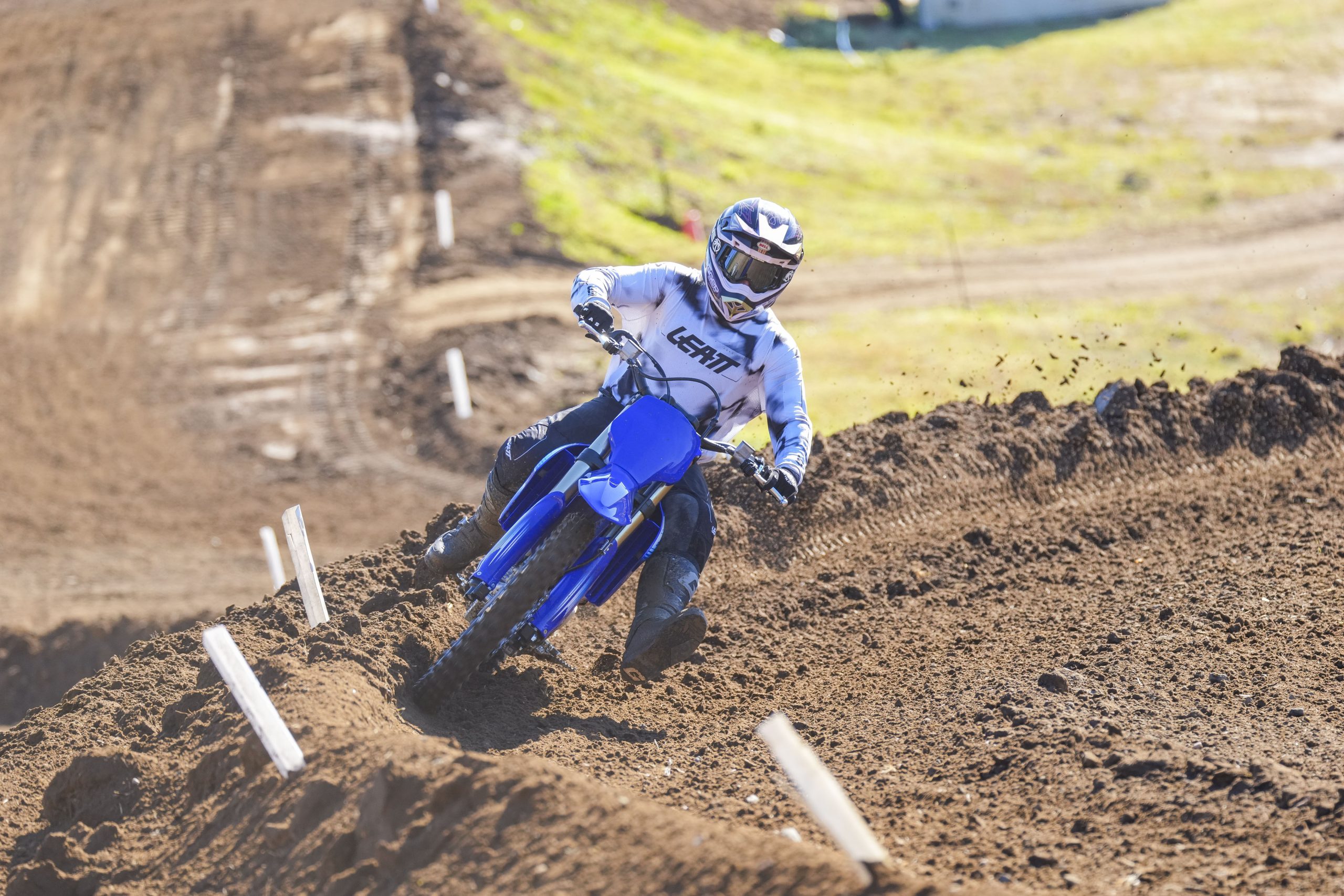
Cornering performance is an enormous improvement. The bike holds its line well in ruts and responds really well to small inputs. That stability helped me push a little harder than I could on previous models. The balance of this bike is the strong point.
The suspension performs admirably across rough terrain, soaking up bumps. At 100kg with gear I need more resistance but that’s the same with all motocross bikes I ride except the Yamaha YZ450F which is the firmest of the lot.
Perhaps most importantly, the RX 450 feels approachable compared with some of the more intimidating bikes in the class. It offers serious performance without overwhelming the rider, a quality that will make it particularly appealing to privateers and club-level racers.
A step forward
In previous years the RX450 simply hasn’t been fast enough or sharp enough in handling to compete with the more-established brands. The 2026 Beta RX 450 represents a significant step forward for the Italian manufacturer. Beta has focused on refining the fundamentals that matter most to racers: more power, a smooth power delivery, balanced handling, and race-ready components.
The result is a motocross machine that feels more competitive and approachable than the last one, a rare combination in the demanding 450 class.
For riders looking for something different from the usual suspects, the RX 450 offers a compelling alternative. It carries the craftsmanship and personality of an Italian brand while delivering the performance required for serious motocross competition.
BETA RX 450
ENGINE
Type: Single-cylinder, 4-stroke, liquid-cooled
Displacement: 449.3cc
Bore x Stroke: 97.0 x 60.8mm
Compression Ratio: 13.5:1
Fuel System: Elldor electronic fuel injection, 46mm throttle body
Starter: Electric
Lubrication: Dual oil pumps
Gearbox: 5-speed
Clutch: Wet multi-disc
DIMENSIONS
Wheelbase: 1475mm
Seat Height: 945mm
Ground Clearance: 335mm
Fuel Tank: 7.0L
Reserve: 1.4L
Dry Weight: 104.5kg (Front 51.4kg / Rear 53.1kg)
SUSPENSION
Front: KYB 48mm AOS closed cartridge fork, adjustable compression and rebound, 305mm travel
Rear: KYB shock (50mm body), adjustable rebound and high/low-speed compression, 300mm travel (135mm stroke)
BRAKES
Front: 260mm wave disc with double-piston floating caliper
Rear: 240mm wave disc with single-piston floating caliper
TYRES
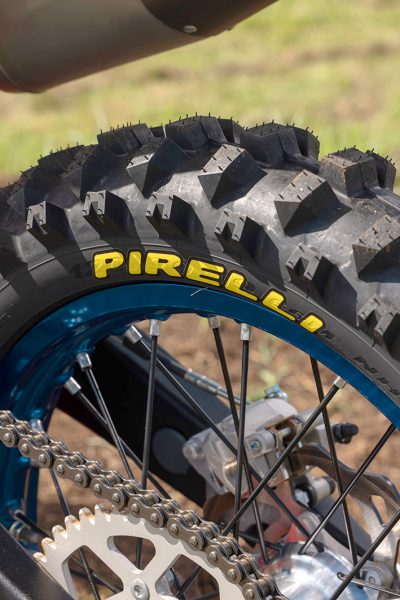
Front Tyre: Pirelli MX32, 80/100-21
Rear Tyre: Pirelli MX32, 110/90-19