There’s something about a 500 that still scares people. Mention it around a campfire and someone will immediately say it’s too big, too powerful, too much work in the bush. The Husqvarna FE501 has long worn that reputation, a desert weapon built for wide-open spaces, long straight trails and desert bashes. In Australia especially, big-bore four-strokes earned their stripes blasting across whooped-out station tracks and high-speed terrain like Finke. Tight trees and technical singletrack? That was supposedly out of the question.
But the modern FE501 isn’t the fire-breathing handful people remember from a decade ago. Husqvarna may have built its 500 platform with Australia’s deserts in mind, yet over the years the engineers have quietly tamed, refined and civilised it. Power delivery is broader and more linear. Throttle response is cleaner. Chassis balance is sharper. What used to feel like a barely-caged animal now feels more like a well-trained thoroughbred that’s still incredibly strong, but far more manageable.
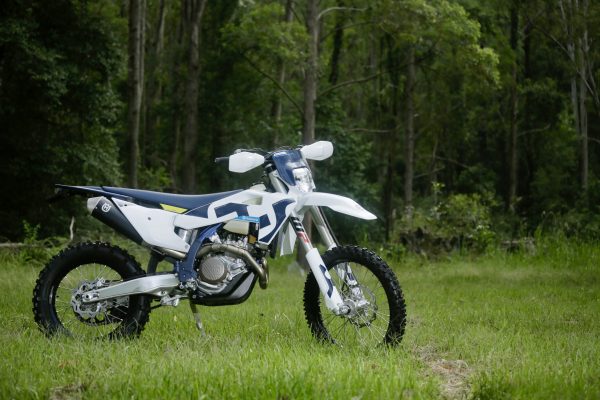
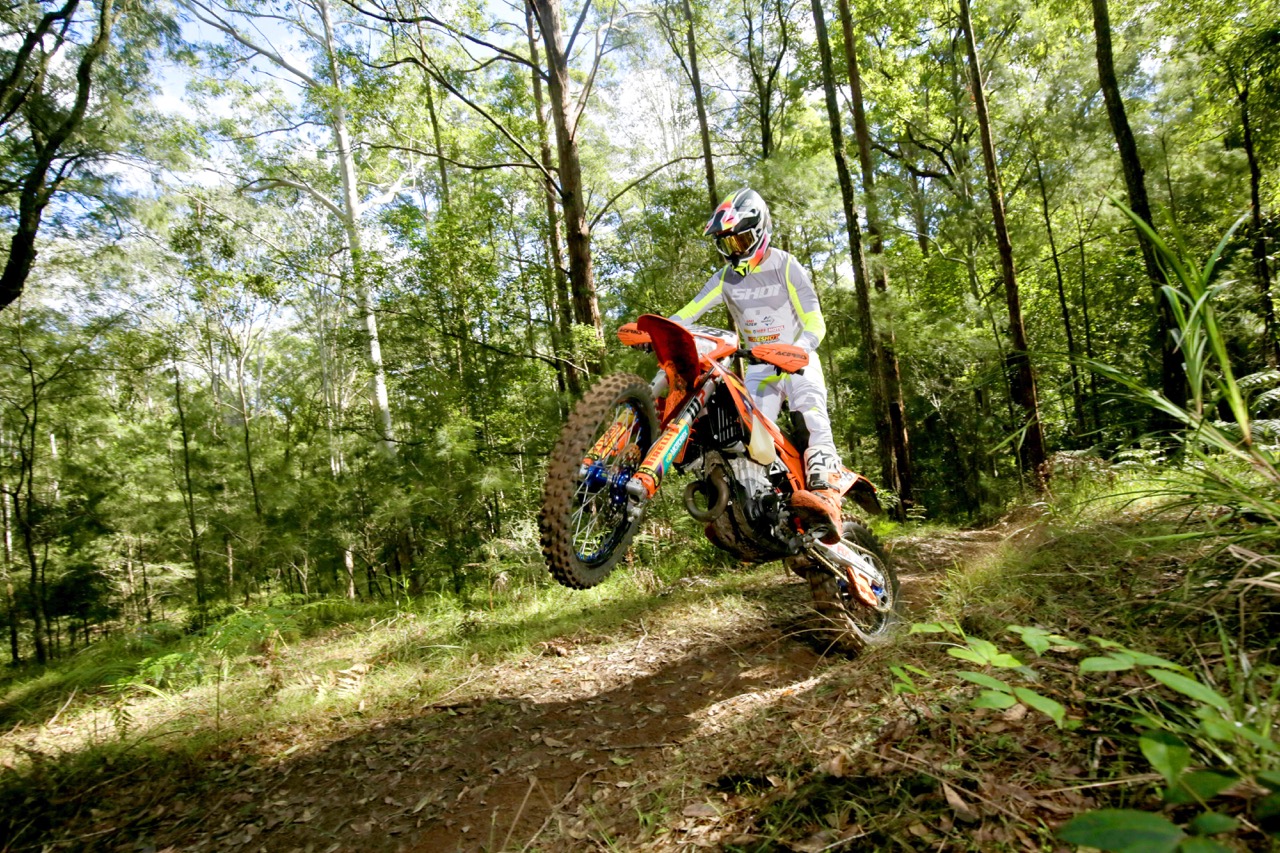
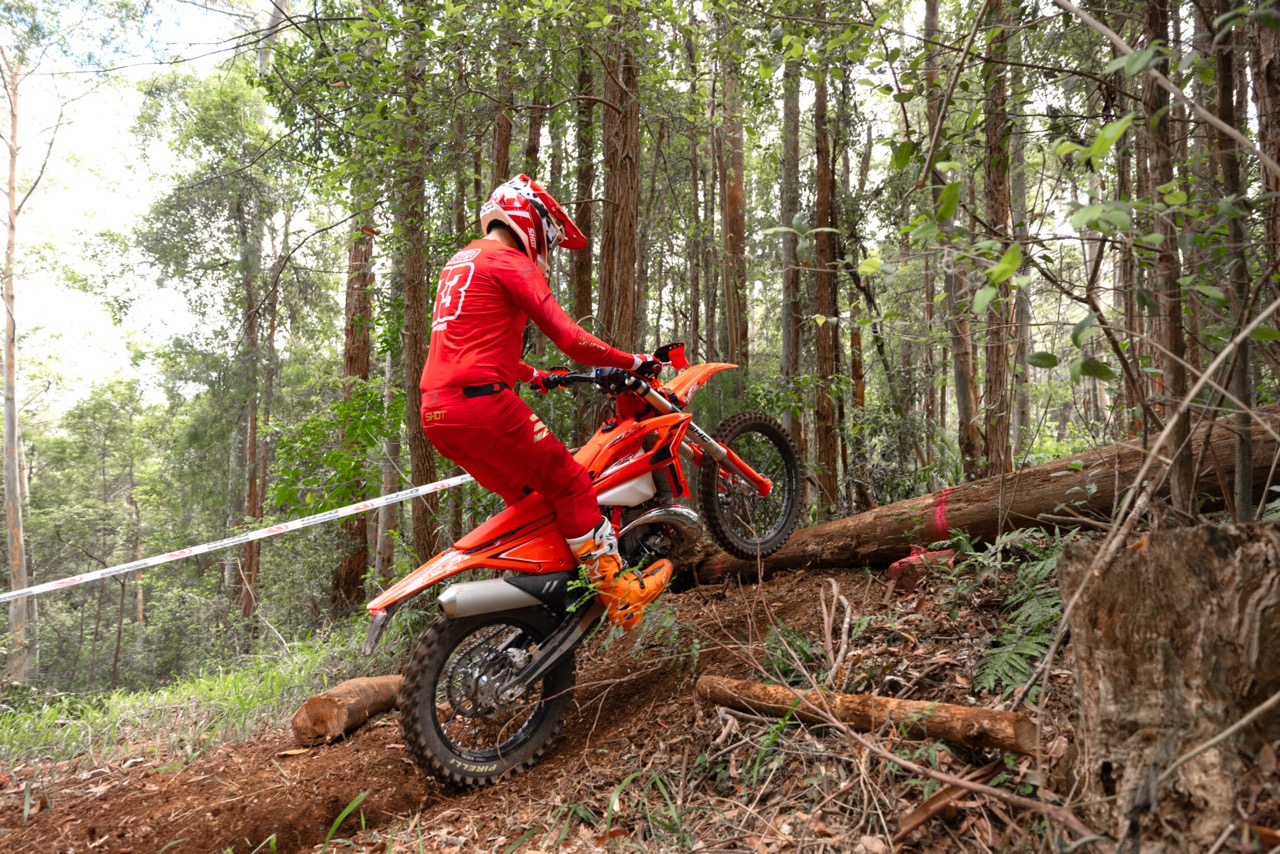
The biggest myth is that a 500 simply can’t be ridden in the bush without exhausting the rider. The reality is more nuanced. Yes, there’s torque everywhere. Yes, it will cover ground faster than most bikes if you let it. But when set up properly and ridden with intention, the FE501 can tractor through tight gullies, pick its way over rock ledges and snake between trees with surprising composure.
The real challenge isn’t the size of the engine. It’s managing the setup. Getting the fueling crisp enough that it doesn’t flame out at low revs. Dialling the suspension so it doesn’t feel tall and top-heavy when you’re paddling through awkward off-camber turns. Once those elements are sorted, the FE501 starts to reveal its secret: it isn’t a desert-only missile anymore. It’s a genuinely versatile big-bore enduro that can handle far more than people give it credit for.

Soft on paper?
On paper, the Husqvarna FE501 looks like exactly what people are afraid of — 510.9cc, 95mm bore, 72mm stroke, and a 12.75:1 compression ratio wrapped around a big single-cylinder four-stroke. It’s the largest engine in Husqvarna’s enduro line-up and, yes, it makes serious torque. But the reason it’s more manageable than most riders expect isn’t the size of the engine, it’s how that engine is packaged and controlled.
Husqvarna positions the internal shaft arrangements close to the centre of gravity, which plays a bigger role than most people realise. By centralising mass inside the engine, the FE501 reduces the pendulum effect that traditionally made big-bore bikes feel top-heavy in tight terrain. Combined with a central double-cradle steel frame and an aluminium-reinforced polyamide subframe, the chassis keeps weight low and balanced. At 110.6kg without fuel, it’s remarkably light for a 500-class machine, and that number goes a long way toward explaining why it doesn’t feel like a tank when you’re threading through trees.

The electronics also soften the intimidation factor. The Keihin EMS and 42mm throttle body work with advanced mapping that allows riders to tailor the power delivery. The enduro-specific six-speed gearbox, manufactured by Pankl Racing Systems, integrates a dedicated engine map for each gear. That means first and second can be tuned for traction and smoothness, while the taller gears allow the engine to stretch out in open terrain. It’s a subtle feature, but it dramatically improves rideability in technical conditions where abrupt torque would otherwise cause flame-outs or wheelspin.
The DDS wet multi-disc clutch with Brembo hydraulics further refines low-speed control. Engagement is predictable and consistent, which helps manage the engine’s torque when picking through rocks or climbing snotty hills. Liquid cooling keeps temperatures stable during slow, technical work which again, is another key factor in preventing stalling and maintaining smooth throttle response.
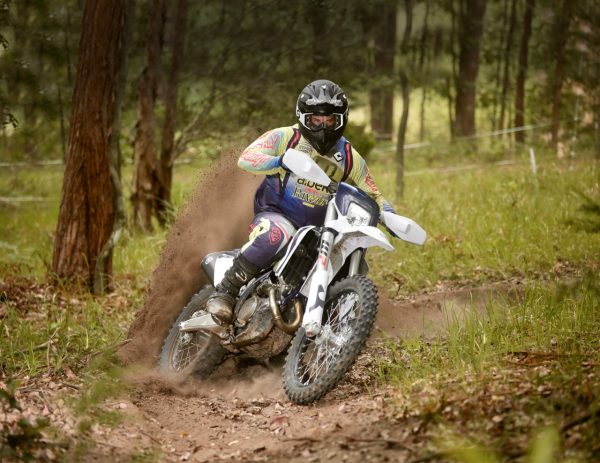
Then there’s the suspension and geometry. WP XACT 48mm cartridge fork up front and a WP XACT linkage rear shock deliver 300mm of travel at both ends. The steering head angle of 63.9 degrees and a 1489mm wheelbase provide high-speed stability without sacrificing agility. With 343mm of ground clearance and an 8.0-litre fuel tank keeping weight centralised, the FE501 is clearly designed to handle both open desert and tighter bushland.
All of this contributes to a bike that feels far more composed than its displacement suggests. The combination of mass centralisation, electronic mapping per gear, quality suspension and relatively low overall weight makes the FE501 easier to ride than the old-school 500s many riders remember.
But here’s the question: has Husqvarna gone too far in civilising it?
With traction-focused mapping, smooth throttle response and highly compliant WP suspension, some riders may feel the FE501 has shifted closer to the middle ground rather than sitting at the sharp end of the big-bore spectrum. Compared to older, more aggressive 500s, it can feel softer off the bottom and more controlled through the midrange. That’s excellent for traction and long days in the saddle but riders chasing a raw, explosive hit might wonder whether some of that edge has been dialled back.
Have They Gone Soft?
Short answer? Yes. Compared to the old KTM 525s, the 530s and the wild Husaberg 570s, the modern FE501 is absolutely softer. But that’s not a bad thing. In fact, it might be the best thing that’s ever happened to big-bore enduro bikes.
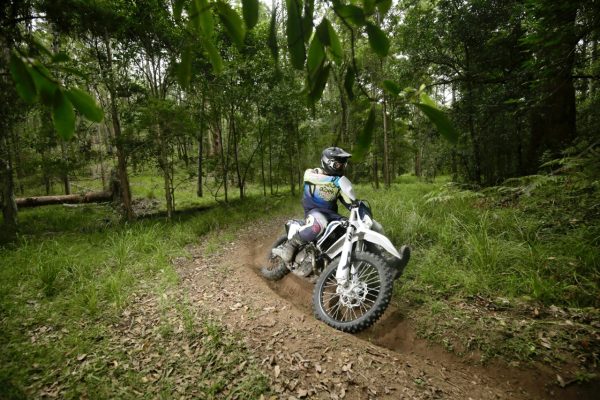
Tester, Wes Mills, was first up. The smallest of the group and the least excited about riding a 500 in tight bush. He admitted he wasn’t looking forward to it. But within a lap he was surprised. Genuinely surprised. It was really easy to ride. The throttle response was spot on. It didn’t have that jerky, on-off feel older 500s were known for. It was user-friendly. Fun, even. The weight wasn’t that noticeable.

That word kept coming up: easy.
The old big-bore bikes used to demand clutch work in tight terrain. You’d be feathering the lever constantly to smooth out that surge of torque. There was always that little bit of free play between on and off throttle that made them feel snatchy. On the 2026 FE501, that’s largely gone. The mapping and the way the power is delivered means you don’t have to ride the clutch around every corner. Even riders who habitually use the clutch found themselves backing off, realising the bike didn’t need it as much.
That’s where the “gone soft” debate really sits. The power is far more linear than the old-school 500s. It doesn’t explode off the bottom. It builds. In fact, one of the comments all testers made was that it might even feel more linear than a 350.
Brigsy, at over 90kg in gear, found he could sit in third gear almost everywhere. The bike has so much torque that you don’t need to constantly change gears. In tighter stuff, he dipped into second, but it wasn’t aggressive. It wasn’t trying to rip your arms off. That little bit of extra inertia is still there – it’s a 500, after all – so you need to use slightly more technique.

The interesting part was fatigue. Wes had just come off a week of mountain biking and expected the 501 to tear his arms off. It didn’t. Yes, you can feel it pulling you along, and you do need a touch more upper-body input than on a 350, but he was smiling. That says a lot.
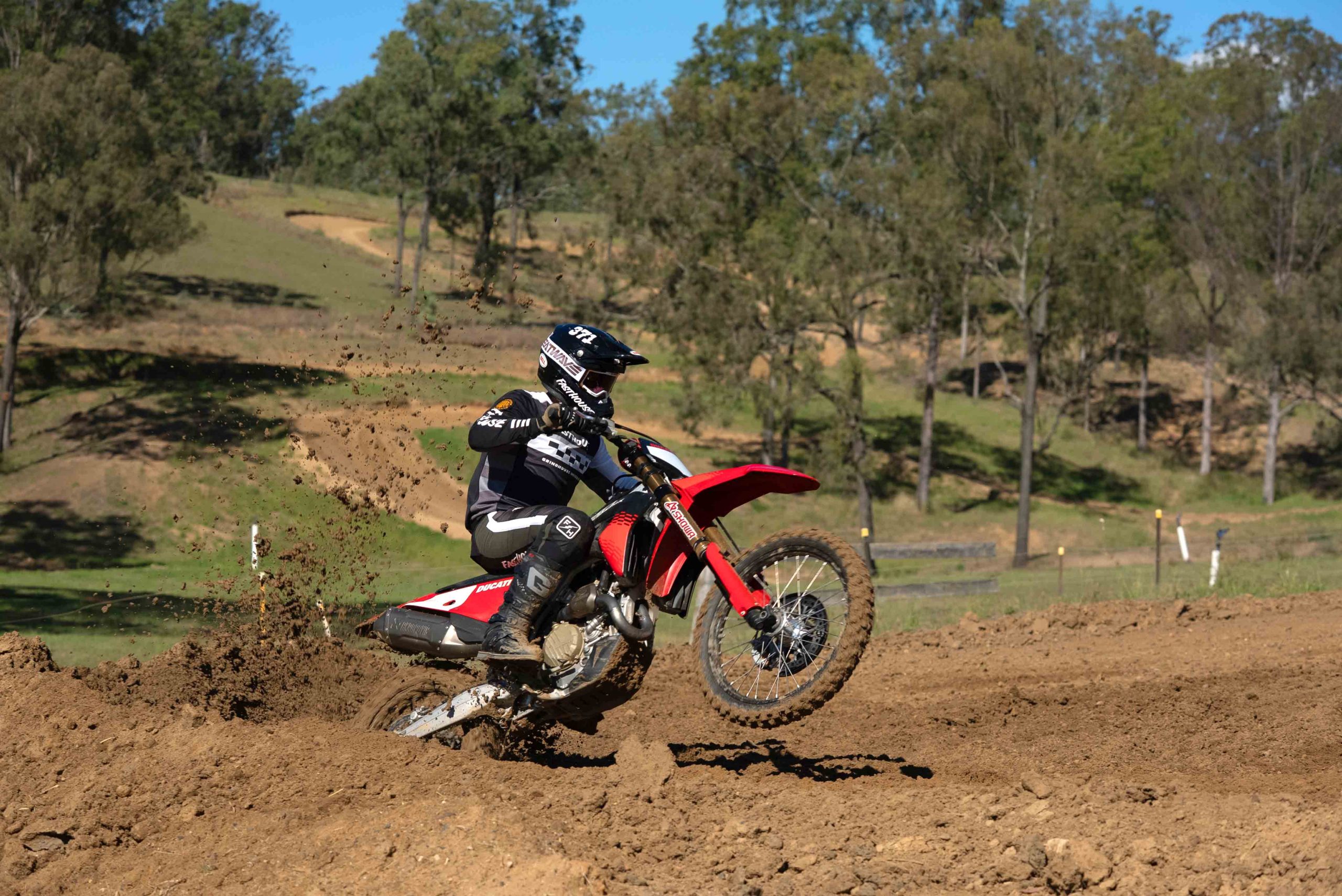
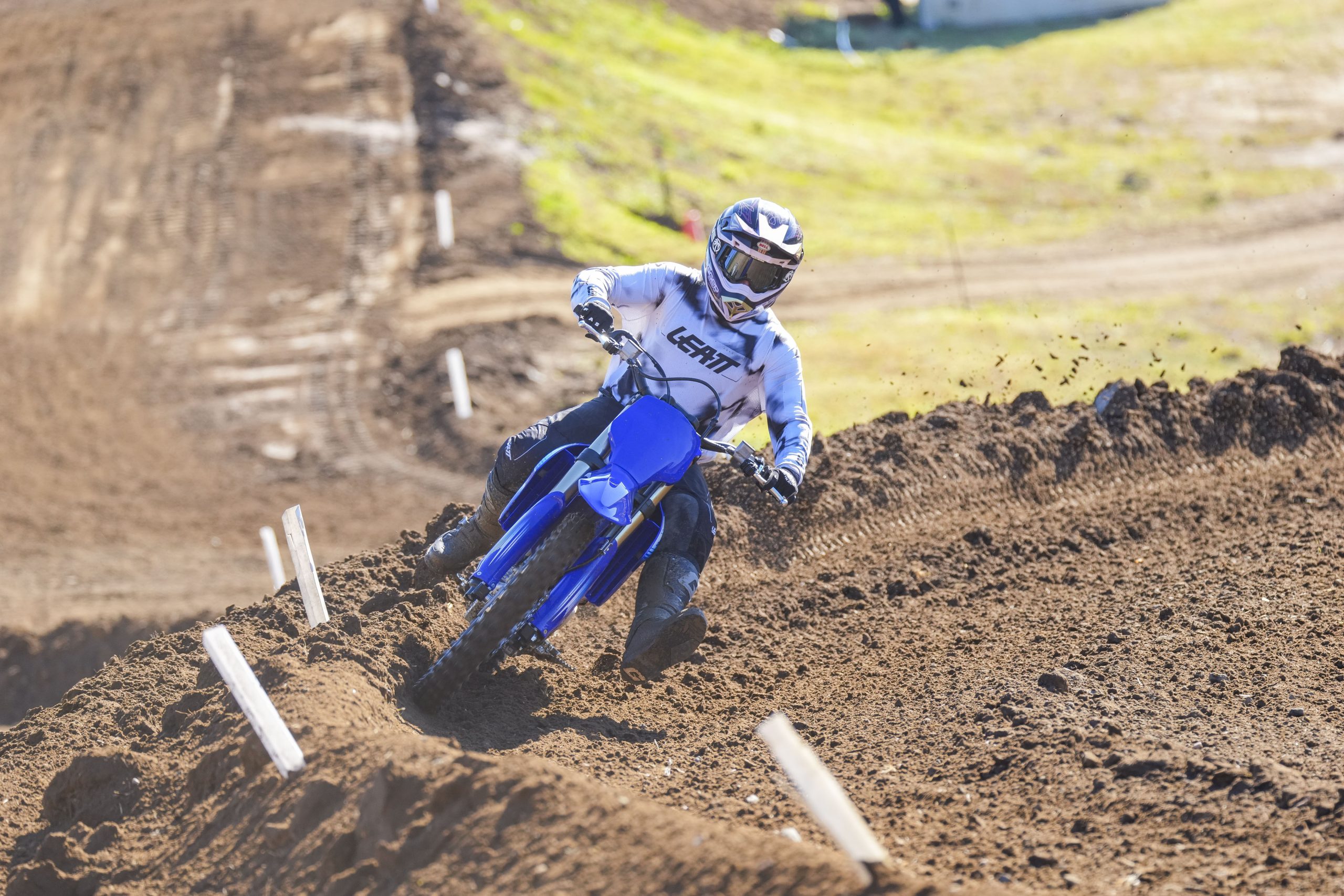
There’s still respect required. You forget how fast you’re going because the engine is barely revving. One near-miss on the motocross track we tested it on as well wasn’t because the bike wouldn’t stop – the Brembos and 260/220mm discs are strong – it was because the rider misjudged his speed.
Where the softness becomes obvious is when you compare it to the old desert kings. The KTM 525 and 530 had a raw edge. The Husaberg 570 was a torque monster that felt like it wanted to climb out of your hands. The FE501 doesn’t feel like that anymore. It feels composed and controlled.

The companies running big ride tours across Australia — the Cape trips, the desert crossings, the multi-day bush adventures — they’re all using 500s now. Why? Because the platform has become safe power. It’s not intimidating power. It’s usable, predictable power that can cruise open trails at 100km/h and then crawl through tight sections without drama.
Up hills, the story continues. You don’t need to rev it to the moon. It won’t violently light up the rear tyre and send you sliding backwards. It tracks. It drives. It still prefers a touch more momentum than a 300cc two-stroke if you’re trying to crawl at walking pace, but it’s not a wild animal anymore.
Would you choose it for hard enduro? Probably not. That’s where the weight and inertia start to show. But for the average Australian rider who takes on open bush trails, fire roads, sandy sections, flowing singletrack, it’s almost ideal.
Another point worth noting is longevity. ADB’s Ben Grabham, who has done more desert racing than most of us combined, has long argued that a 500 will give you more life out of a piston than a smaller-capacity bike ridden hard. If you’re the kind of rider who racks up serious kilometres like commuting, touring, trail riding, that matters. Big-bore four-strokes often live a slightly easier life per rev than a smaller engine wrung out everywhere.
And then there’s the chassis feel. The Husky sits lower than you expect. Our shorter riders immediately noticed it. That subtle difference in how the bike squats, how the linkage as opposed to PDS works, how the seat-to-peg relationship feels builds confidence.

Is it true, are they soft?
Yes — compared to the fire-breathing 500s of the past.
But that softness has turned the FE501 into something far more appealing to a much wider audience. It’s almost as easy as a 350 in the bush now. It doesn’t flame out constantly. It doesn’t feel ridiculously top-heavy. It doesn’t demand clutch abuse in tight corners.
Yet when the trail opens up, it still rips the desert. It still stretches its legs in a way smaller bikes simply can’t. It still has that effortless top-end speed that makes long, open sections feel like nothing.
The FE501 hasn’t lost its identity. It’s just matured. And in Australia where our riding is often more open, more flowing and more varied than people realise, that evolution might be exactly what a modern 500 needed.

2026 Husqvarna FE 501
ENGINE
Type: Single-cylinder, 4-stroke
Displacement: 510.9cc
Bore x Stroke: 95mm x 72mm
Compression Ratio: 12.75:1
Fuel System: Keihin EFI, 42mm throttle body
Engine Management: Keihin EMS
Cooling: Liquid cooled
Starter: Electric start
Clutch: DDS wet multi-disc, Brembo hydraulics
Transmission: 6-speed (Pankl Racing Systems)
CHASSIS
Frame: Central double-cradle steel
Subframe: Aluminium-reinforced polyamide
Front Suspension: WP XACT cartridge fork Ø48mm, 300mm travel
Rear Suspension: WP XACT monoshock with linkage, 300mm travel
Handlebar: Pro Taper aluminium Ø28/22mm
BRAKES
Front Brake: Brembo, 260mm disc
Rear Brake: Brembo, 220mm disc
WHEELS & TYRES
Tyres Front: Michelin Enduro Medium 90/90-21
Tyres Back: Michelin Enduro Medium 140/80-18
DIMENSIONS & WEIGHT
Wheelbase: 1489mm (±10mm)
Seat Height: 952mm
Ground Clearance: 343mm
Tank Capacity: 8.0L
Weight (without fuel): 110.6kg
RRP &Warranty
$18,755
6 months
www.husqvarna-motorcycles.com/en-au